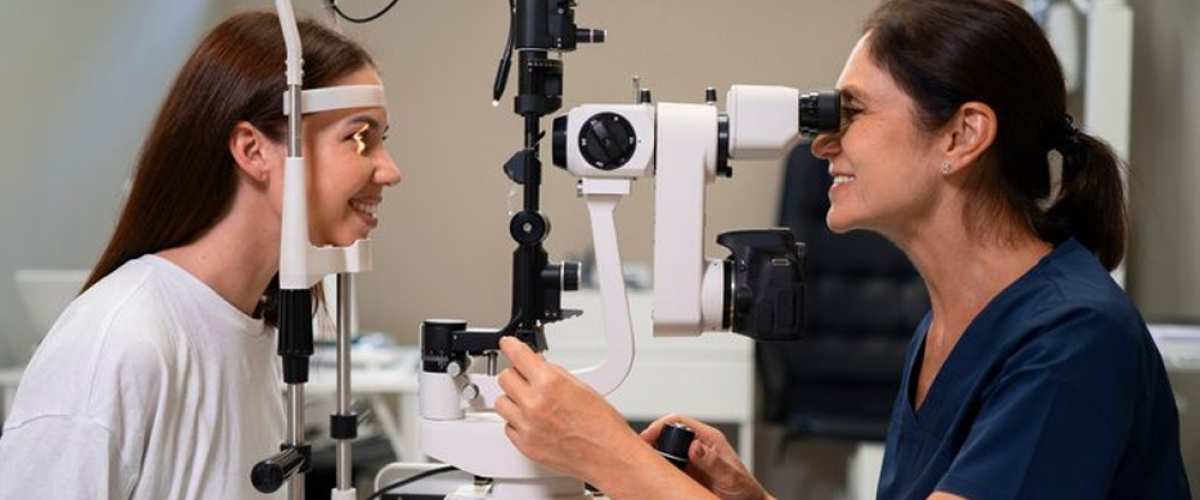
By inserting a biocompatible lens into the eye, usually between the iris and native lens, ICL surgery (Implantable Collamer Lens) corrects eyesight. It is appropriate for patients with thin corneas or high prescriptions because, in contrast to LASIK, it does not remove corneal tissue.
Important attributes:
- Collamer, a flexible and UV-resistant collagen-co-polymer, is used to make lenses.
- Reversible: If necessary, the lens can be taken out.
- No Risk of Dry Eyes: It doesn't damage corneal nerves like LASIK does.
- Astigmatism (up to -6.0D), hyperopia (+3.0 to +10.0D), and myopia (-3.0 to -20.0D) can all be corrected with this high prescription range.
Symptoms After ICL Surgery (Normal vs. Concerning)
Normal (Temporary):
- Mild blurred vision (clears in hours/days).
- Light sensitivity or glare (improves in weeks).
- Mild discomfort (foreign body sensation).
Concerning (Require Immediate Attention):
- Severe pain (risk of acute glaucoma or infection).
- Sudden vision loss (retinal detachment risk).
- Persistent halos/glare (may indicate lens misplacement).
- Redness, swelling, or discharge (sign of infection).
Who is a Good Candidate?
- Ages 21–45 with stable vision.
- Thin corneas (unsuitable for LASIK).
- High myopia/hyperopia beyond LASIK limits.