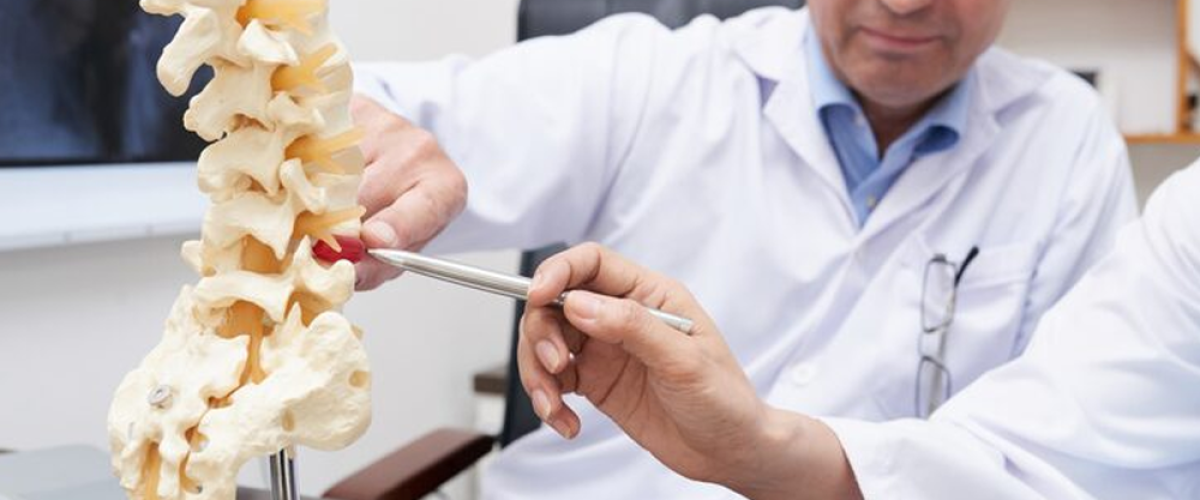
By joining the first sacral vertebra (S1) with the fourth and fifth lumbar vertebrae (L4-L5), a surgical operation known as L4-L5-S1 fusion stabilizes the lower spine. This is done to alleviate persistent pain brought on by nerve compression, degeneration, or instability.
Common Signs of Fusion of L4-L5-S1
- Prolonged lower back pain that gets worse when you walk, stand, or sit.
- Sciatica is discomfort that radiates down the leg as a result of compression of the L5 or S1 nerve roots.
- Conditions such as spondylolisthesis (slipped vertebra) can cause spinal instability.
- Bone-on-bone contact due to severe disc wear is known as degenerative disc disease.
- Conservative treatments do not help herniated or bulging discs.
- Nerve pinching and spinal canal narrowing are symptoms of spinal stenosis.
- Unsuccessful prior surgery, such as a discectomy that failed to alleviate discomfort.
Types of L4-L5-S1 Fusion Surgery
1. Posterior Lumbar Fusion (PLF)
- Most common approach, done through the back.
- Uses screws, rods, and bone grafts to stabilize the spine.
2. Anterior Lumbar Interbody Fusion (ALIF)
- Done through the abdomen, removes the damaged disc, and replaces it with a spacer/cage.
- Often combined with posterior fixation.
3. Transforaminal Lumbar Interbody Fusion (TLIF)
- Minimally invasive, approaches from the side to reduce muscle damage.
- Often preferred for less post-op pain.
4. Lateral Lumbar Interbody Fusion (LLIF/XLIF)
- Side approach, avoids major back muscles.
- Used for disc height restoration.