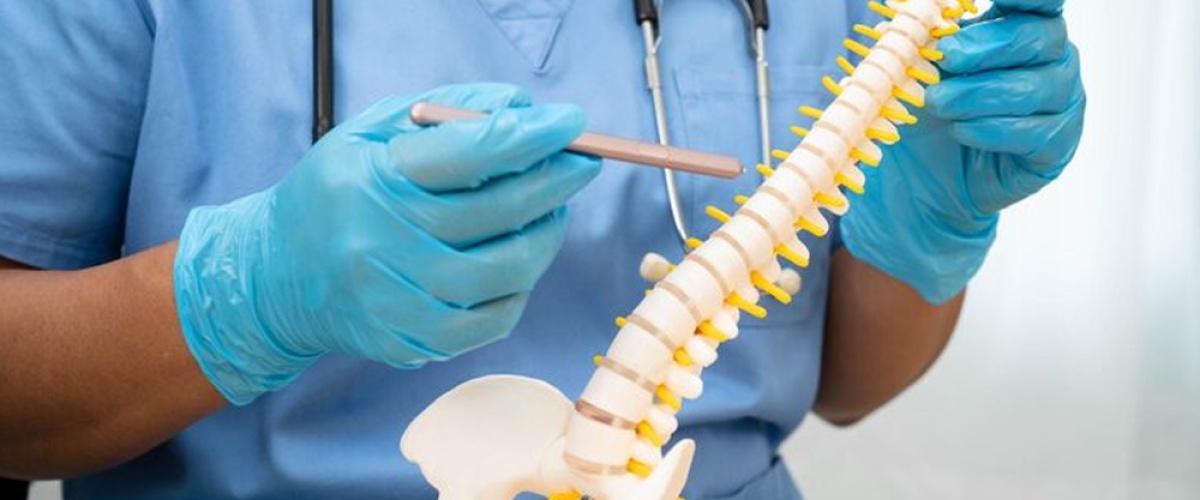
The abnormal lateral (sideways) curvature of the spine, known as scoliosis, is frequently accompanied by vertebral rotation. Although degenerative disorders can cause it to appear in adulthood, it most frequently manifests in childhood or adolescence.
Scoliosis types
1. The majority of cases (around 80%) are idiopathic scoliosis.
- AIS, or adolescent idiopathic scoliosis, is diagnosed in people aged 10 to 18.
- Less frequent are infantile (0–3 years) and juvenile (ages 4–10).
- Genetics might be involved, but the cause is unknown.
2. Scoliosis that is born
- Caused by congenital defects of the spine.
3. Scoliosis in Neuromuscles
- For reasons such as spinal cord damage, muscular dystrophy, or cerebral palsy.
4. Scoliosis Degenerative (Adult-Onset)
- Brought on by osteoporosis, disc degeneration, or arthritis.
Symptoms of Scoliosis
- Visible spinal curve (C- or S-shaped).
- Uneven shoulders or hips (one higher than the other).
- Rib hump (visible when bending forward).
- Back pain (more common in adults).
- Fatigue after prolonged sitting/standing.
- Breathing difficulties (in severe cases due to rib cage deformity).